




Video tour
Watch a video tour of the Laboratory of Genomics and Prenatal Diagnostics.

The laboratory focuses on the analysis of biological material from the perspective of genetics and epigenetics. In addition to standard molecular biology methods such as PCR and qPCR, the laboratory also uses modern technologies such as massively parallel sequencing (next genera-tion sequencing – NGS) and microarray.
Cooperation with the laboratory is especially requested in the implementation of projects focused on the detection of congenital and acquired point mutations, infectious diseases, ana-lysis of the composition of bacterial microflora, as well as screening and detection of genetic and epigenetic changes in oncological diseases and monitoring therapy.
The achieved results allow us to solve projects focused on personalized, predictive and preven-tive medicine. The professional experience of scientific and research workers also allows us to provide consultations regarding technologies and analysis of results.
As part of non-invasive prenatal testing, the laboratory offered non-invasive fetal testing from maternal blood, in particular to determine the RhD factor and the presence of aneuploidies using NGS technology. Data processing led to the granting of European patent EP3447153A1.
We closely cooperate with the Martin University Hospital, especially with clinical departments providing treatment and preventive care in the areas of oncology, gynecology, pediatrics, neu-rology and hematology.

Nucleic acid isolation (DNA/RNA/miRNA) is a key step in studying genetic information and further genetic, epigenetic, and molecular analyses. The laboratory offers various methods for isolating and preparing DNA, RNA, and miRNA from biological samples such as blood, blood plasma, urine, fresh and FFPE tissue, as well as cell swabs (cervical, nasopharyngeal – SARS-CoV-2, buccal, etc.). Modern technologies and commercially available kits are used for nucleic acid extraction, focusing on high purity and yield. The extracted DNA, RNA, and miRNA are subsequently used for analyses such as Sanger sequencing, NGS, microarray, qPCR, RT-qPCR, HRM, pyrosequencing, and others. Reliable and efficient nucleic acid isolation enables accurate and reproducible results, supporting progress in scientific and medical disciplines.
Publications
The method of polymerase chain reaction (PCR) allows for the rapid and efficient amplifica-tion of specific fragments of DNA. Typical PCR process includes 25-35 cycles and during each cycle, amount of target DNA is doubled. This exponential replication leads to millions to
billions of copies of the DNA fragment. The results are analyzed by gel electrophoresis or San-ger sequencing. PCR is carried out in Biometra Tones thermal cyclers (Analytik Jena).
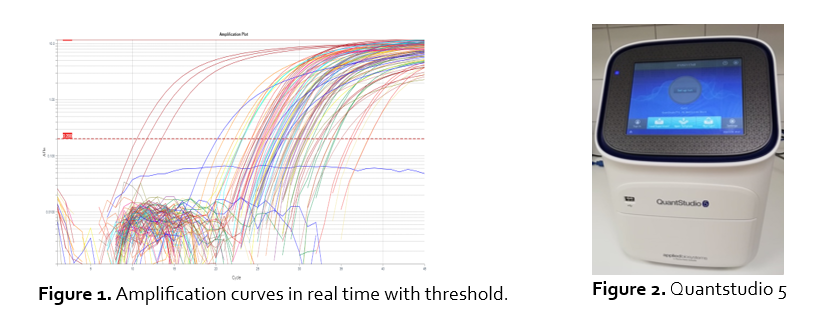
PCR in real time (real-time PCR) is also known as quantitative PCR (qPCR). It is a sensitive and specific various applications. The amplified DNA is visualized by fluorescence after each cycl, and by this way it is monitoted in real time. Thera are two qPCR detection methods- sequ-ence-nonspecific fluorescent dye (e.g. SYBR Green) or sequence-specific fluorescently labe-led probes (e.g. TaqMan). The emited fluorescence is detected by instrument´s software and DNA is quantified based on the Ct value (threshold cycle) (Figure 1), which is inversely propor-tional to the input amount od DNA template.
Reverse transcription polymerase chain reaction (RT-PCR) is a method combining reverse trancription of RNA to complementary DNA (cDNA) and amplification of specific DNA targets using PCR. It is primarily used to measurement of amount of specific RNA in experiments aimed at gene expression analysis and quantification of viral RNA in research and clinical settings (SARS-CoV-2 testing). If amplification is performed using real-time PCR or quantita-tive PCR (qPCR), it is called RT-qPCR (reverse transcription quantitative PCR).
The abbreviations for the above-mentioned PCR variations often cause confusion, so the gui-delines “Minimum information for publication of quantitative real-time PCR (MIQE)” [1] have been pub-lished. They clarify the using of abbreviations (Table 1).
Tabuľka 1. Nomenklatúra podľa MIQE guidelines [1].
Method | Abbreviation |
Polymerase chain reaction | PCR |
Reverse transcription polymerase chain reaction | RT-PCR |
Polymerase chain reaction in real time | qPCR |
Combined method RT-PCR / qPCR | RT-qPCR / qRT-PCR |
[1] Bustin SA, Benes V, Garson JA, et al. The MIQE guidelines: minimum information for publication of quantita-tive real-time PCR experiments. Clin Chem. 2009;55(4):611-22. doi: 10.1373/clinchem.2008.112797.
Using of qPCR/ RT-qPCR in our laboratory:
Instruments: QuantStudio 5 (Applied Biosystems, Figure 2), QTower 3 (Analytik Jena), Bio-metra Tone (Analytik Jena).
Publications
Microarray technology is used in a wide range of applications. It allows for the determination of the expression level of a large number of genes, genotyping of various regions of the genome, as well as the analysis of epigenetic changes.
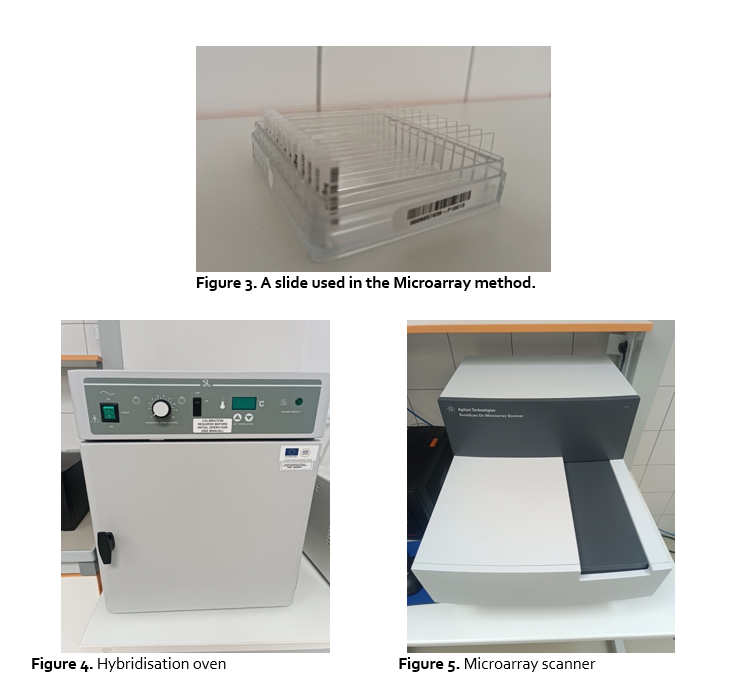
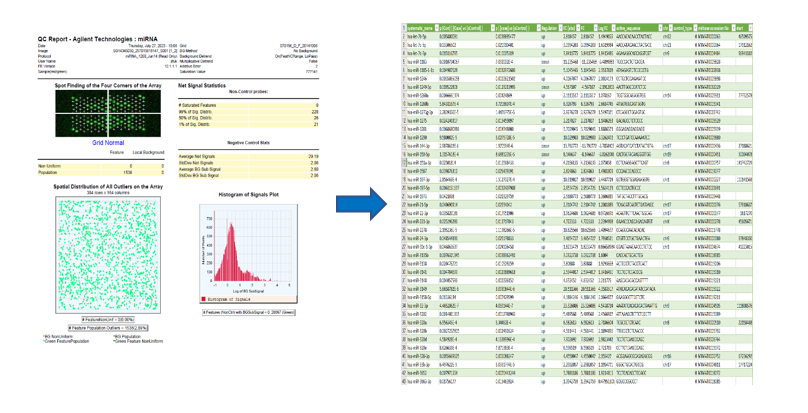
The method is based on the principle of hybridization – the formation of complexes between the sample and sequence-specific probes that are immobilized on the surface of the slide (Figure 3). Up to several thousand probes specific for different DNA or RNA segments can be fixed on one slide. Hybridization takes place under strictly controlled conditions in a hybridization oven (Figure 4). The resulting probe-sample complexes are labeled with a fluorophore, which allows the detection and quantification of target molecules based on the intensity of the emitted fluo-rescent signal. Detection is performed using a high-resolution fluorescence scanner, e.g. SureScan Dx (Figure 5). The output is a graphic file in TIF format, from which the data is further processed using Feature Extraction software (Figure 6).
Microarray analyses can be performed on tissue samples, cell cultures, and liquid biopsy. It is also possible to design custom chips with variable capacity, adapted to a wide range of plant and animal species.
Use of microarray technology in the laboratory:
– microRNA expression analysis
– gene expression analysis
– CGH+SNP analysis
Instrumentation: SureScan Dx Microarray Scanner (Agilent)
Microarray Hybridization Oven
Software: GeneSpring GX (Agilent)
Pathway Architect
CytoGenomics
Genomic Workbench
Publications
… currently in preparation
1) Next Generation Sequencing (NGS)
Next generation sequencing (NGS), also known as massively parallel sequencing, allows for the ana-lysis of large volumes of data in a single sequencing run. The most commonly used approach is the sequencing by synthesis (SBS) method from Illumina®. The principle is the incorporation of fluores-cently labeled dNTPs during DNA synthesis, with each added base detected by excitation of a fluo-rophore.
The sequencing process takes place in several steps:
1. Library preparation – Genomic DNA is fragmented and then adapter sequences and indexes are added to the fragments (for multiplexing).
2. Cluster formation – Single-stranded fragments are bound to the surface of a glass plate (flow cell) via adapters and then amplified using the so-called bridge amplification method.
3. Sequencing – SBS technology detects the incorporation of fluorescently labeled bases into the growing DNA chain.
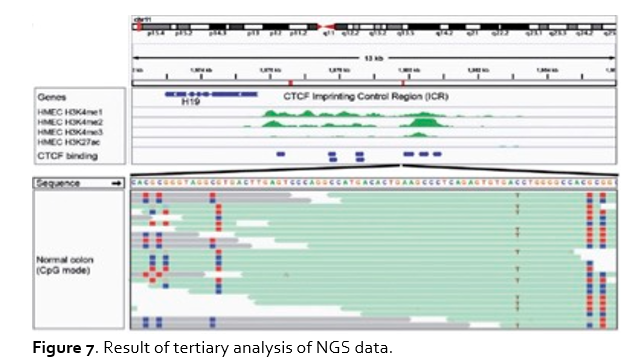
4. Data analysis – Primary analysis (e.g., generation of BCL, FASTQ, etc. files) is performed directly in the sequencing device. Predefined analytical pipelines are used for secondary and tertiary analysis, which allow interpretation of results and their final processing (Figure 7).
NGS technology is applied in various areas of molecular biology and medicine, for example: sequen-cing of small genomes, exome and targeted resequencing, transcriptomics (including gene expression analysis), miRNA sequencing, metagenomic studies, Single Cell analyses (sequencing of individual cells).
Use of NGS in the laboratory:
– panel sequencing (amplicon-based panels using Ampliseq technology and hybridization-based pa-nels – TSO 500)
– RNA sequencing
– Metagenomic sequencing
– low-coverage whole-genome sequencing (has been used in prenatal diagnostics)
– detection of the presence of SARS Cov-2 in various types of samples
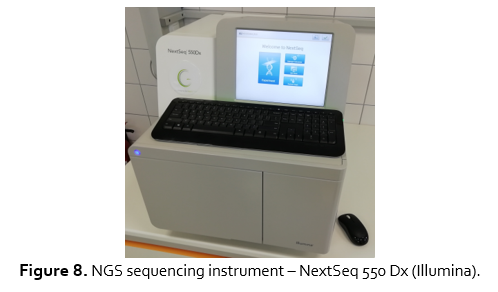
Instrumentation: NextSeq 550Dx (Illumina®, Figure 8) with data output of 39 Gb – 120 Gb, depen-ding on the length of sequencing reads and reagents used (Mid vs. High Output).
Publications
2) Sanger sequencing
The enzymatic sequencing method, also known as dideoxysequencing, was developed in the 1970s by Frederick Sanger. It is still considered the “gold standard” in molecular biology.
The principle of the method is to add fluorescently labeled dideoxynucleotide triphosphates (ddNTPs: ddATP, ddTTP, ddCTP, ddGTP) together with unlabeled standard deoxynucleotide triphosphates (dNTPs) to the PCR reaction mixture. During amplification, a population of DNA fragments of different lengths is formed, each fragment being terminated by exactly one fluo-rescently labeled ddNTP.
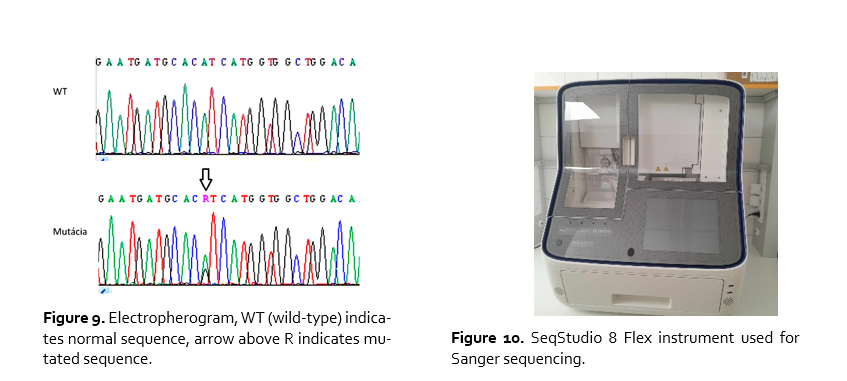
The fragments thus formed are subsequently separated according to size using capillary electrophoresis in a liquid polymer. As the fragments pass through the capillary, the fluorescent signal of the individual ddNTPs is detected by a camera. The emitted radiation is recorded and processed by software into the resulting electropherogram (Figure 9).
Use of Sanger sequencing in the laboratory:
– detection of point mutations, small insertions and deletions, SNPs
– validation of NGS results
– sequencing of cloned fragments
– detection and typing of bacterial and viral DNA in samples
Instrumentation: SeqStudio 8 Flex (Applied Biosystems, Figure 10)
Publications
3) Pyrosequencing
Pyrosequencing is one of the first next-generation sequencing (NGS) technologies based on the principle of “sequencing by synthesis”. Detection is performed luminometrically based on the release of pyrophosphate (PPi) during DNA polymerization. The template DNA is first modi-fied by bisulfide conversion using sodium bisulfide and then amplified by PCR. One of the primers used is labeled with biotin at its 5’ end, which allows for selective isolation of PCR products. In the next step, the biotinylated amplicons are bound to streptavidin-sepharose beads, thus preparing them for sequencing in a pyrosequencing device.
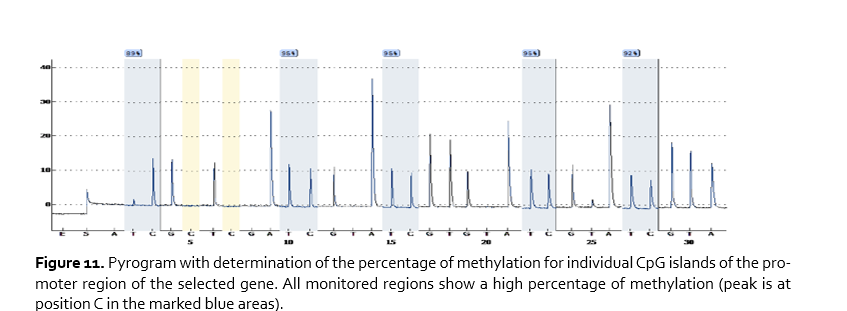
We use the PyroMark Assay Design 2.0 software (Qiagen, Germany) to design primers for pyrosequencing. The resulting data are visualized in the form of a pyrogram (Figure 11), which is then analyzed in the specialized software supplied with the device.
Use of pyrosequencing in the laboratory:
– Analysis of DNA methylation levels at CpG and non-CpG sites
– Analysis of SNPs, insertions and deletions in short DNA stretches
– De novo sequencing of short DNA stretches
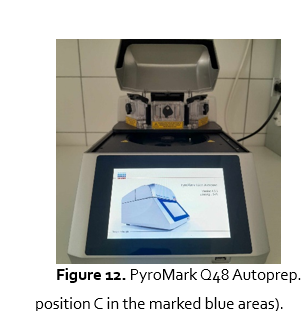
Instrumentation: PyroMark Q48 Autoprep (QIAGEN), Figure 12.
Publications
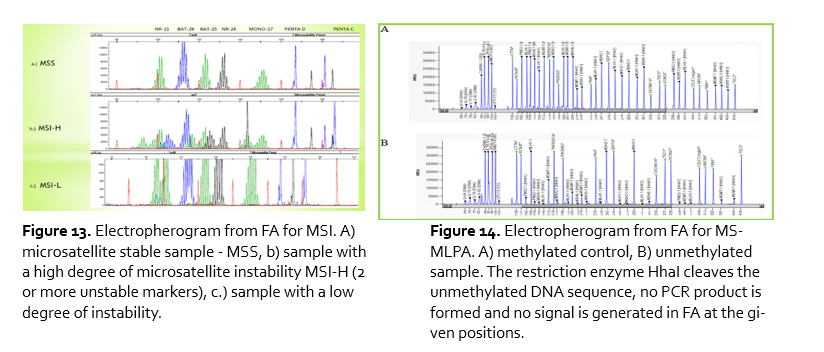
Fragment analysis (FA) is used to determine the size of DNA fragments obtained by PCR am-plification. The isolated DNA is amplified by multiplex PCR, in which newly synthesized DNA fragments are labeled with fluorescent dyes. The fluorescently labeled PCR products subsequ-ently migrate during capillary electrophoresis in a liquid polymer based on their size. The de-tected fluorescent signal is recorded by the instrument software and subsequently evaluated in specialized analysis software, such as GeneMapper (Figure 13).
Fragment analysis is also used as part of the Multiplex Ligation-dependent Probe Amplification (MLPA) method, which is used to detect the relative copy number of specific sequences. MLPA is used, for example, in testing for the presence of BRCA1 and BRCA2 mutations in patients with suspected hereditary breast and ovarian cancer, or in patients with a confirmed diagnosis.
A common modification of this method is methylation-specific MLPA (MS-MLPA) (Figure 14), which allows not only the detection of the methylation status of selected promoter regions of genes, but also the detection of copy number variations (CNVs).
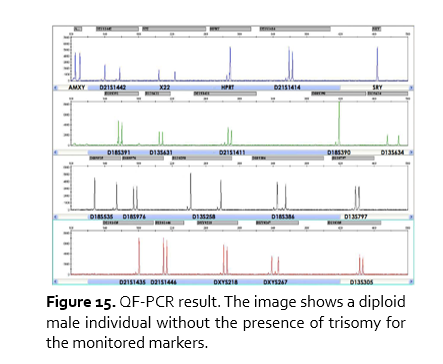
FA is also used in prenatal diagnosis to detect chromosomal aneuploidies. It is part of diagnostic tests based on quantitative fluorescent PCR (QF-PCR), which serve for the rapid detection of trisomies of chromosomes 13, 18, 21, X and Y (Figure 15).
Current uses of fragment analysis in the laboratory:
– identification of microsatellite instability (MSI), i.e. changes in the length of microsatellites caused by insertion or deletion of repetitive sequences.
Instrumentation: SeqStudio 8 Flex (Applied Biosystems, Figure 10).
Publications
Laboratory infrastructure
The laboratory has modern instrumentation that allows the selection of an appropriate molecular bi-ology method according to the needs of the ongoing research and the required analyses.
Main instruments: NextSeq 550 Dx (Illumina), SeqStudio 8 Flex (Applied Biosystems), QuantStudio 5 (Applied Biosystems), Q-Tower 3 G (Analytik-Jena) and PyroMark Q48 Autoprep (Qiagen).
Auxiliary instruments: Bioanalyser 2100 (Agilent), Biometra Tone (Analytik-jena), Focused ultrasoni-cator ML230 (Covaris), Qubit 4 fluorometer (Thermo Fisher Scientific), NanoDropTM OneC Microvo-lume UV-Vis Spectrophotometers (Thermo Scientific) and others.
In collaboration with the Institute of Molecular Biology and Genomics of the JLF UK, we also use other equipment, such as the SureScan Dx Microarray Scanner (Agilent), Droplet Digital PCR System (Bio-Rad) and LightCycler 480 II (Roche).
a) Projects co-financed by EU resources:
09I03-03-V04-00228, Epigenetic changes during the development of cervical cancer. Respon-sible Investigator: Mgr. Veronika Holubeková, PhD. Funded by the EU NextGenerationEU through the Recovery and Resilience Plan for Slovakia.
SPEnCER – 313011BWX6 „Research of spectroscopic methods for early, non-invasive real-time identification of selected diseases from gas condensate released by lungs and skin.“
ITMS 313011AUA4: New possibilities for laboratory diagnostics and massive screening of SARS-Cov-2 and identification of mechanisms of virus behavior in the human body. Operational Pro-gram Integrated Infrastructure. CovLab.
ITMS 310031AMR7: Management of emergency situations related to COVID-19 coordinated by the Ministry of Health of the Slovak Republic. Operational Program: Environmental Quality 2014 – 2020.
ITMS: 313011AFG5: Systemic public research infrastructure – biobank for cancer and rare di-seases. Operational Program Integrated Infrastructure 2014-2020. Bioford.
ITMS: 313011AFG4: Creation of a digital biobank to support the systemic public research in-frastructure. Digibiobanka.
ITMS 313011V446: Integrative strategy in the development of personalized medicine of se-lected malignant tumors and its impact on quality of life. Operational Program Integrated In-frastructure 2014-2020. Lisper.
ITMS 313011V344: Long-term strategic research on prevention, intervention and mechanisms of obesity and its comorbidities. Operational Program Integrated Infrastructure 2014-2020. Obesity.
b) National projects – principal investigator:
VEGA 1/0286/22: Complex profile of hormone-dependent women cancers determing early diagnosis, targeted personalized therapy and prediction of the disease recurrence.
Responsible investigator: doc. RNDr. Danková Zuzana, PhD.
VEGA grant č. 1/0272/19: Application of circulating miRNA as potential biomarkers for pre-gnancy complications. Responsible investigator: RNDr. Zuzana Kolková, PhD. (Mgr. Andrea Hor-náková, PhD.)
c) National projects – co-investigator:
APVV-23-0428: The role of vaginal microbiome and immune system in the process of HPV-induced cervical carcinogenesis. Responsible Investigator: Prof. MUDr. Erik Kúdela, PhD.
APVV-21-0372: Development of a large orthotopic xenograft animal model (XenoPig) for pancreatic cancer modeling. Responsible investigator: Ing. Ján Strnádel, PhD.
APVV-17-0369: DNA methylation as a target for epigenetic editing and its utilization in personalizing the diagnosis and therapy of uveal melanoma. Responsible investigator: Mgr. Božena Smolková, PhD.
APVV-17-0037: Development of new in vitro models for amyotrophic lateral sclerosis and testing the safety of neural precursors derived from human induced pluripotent stem cells. Responsible investi-gator: Ing. Ján Strnádel, PhD.
VEGA 1/0145/22: „The role of non-coding RNAs in the onset and development of major depressive disorder.“ Responsible investigator: RNDr. Dušan Braný, PhD.
VEGA 1/0269/22: „Study of differential gene expression of immune, inflammation and hypoxia genes in colorectal cancer“ Responsible investigator: doc. RNDr. Zora Lasabová, PhD.
VEGA 1/0398/21: „Immune system and vaginal microbiome as important mediators in the process of cervical carcinogenesis. Principal investigator: doc. MUDr. Erik Kúdela, PhD.
VEGA 1/0310/18: Relationship between early onset of microvascular complications and dysregulation of hemostasis in children with diabetes mellitus type 1. Principal investigator: MUDr. Jarmila Vojtková, PhD.
VEGA 1/0380/18: Analysis of methylated DNA sequences in plasma as a universal marker for monito-ring colorectal cancer relapse.
Responsible investigator: doc. RNDr. Zora Lasabová, PhD.
Watch a video tour of the Laboratory of Genomics and Prenatal Diagnostics.
The laboratory uses several devises of the Department of Molecular Biology and Genomics, JFMED CU. This collaboration has created a modern and excellent instrument portfolio that allows the selection of the most appropriate method according to the research and required analyses.
Main instruments: MiSeq (Illumina), NextSeq Dx (Illumina), SureScan Dx Microarray Scanner (Agilent), Droplet Digital PCR System (Bio-Rad), PyroMark Q96 ID (Qiagen), LightCycler 480 II (Roche), 3500 Genetic Analyzer (Applied Biosystems), Q-Tower3 G (Analytik Jena), TOne (Analytik Jena), Bioanalyser 2100 (Agilent), QSep 100 (BiOptic), Qubit 4 fluorometer (Thermo Fisher Scientific), NanoDropTM OneC Microvolume UV-Vis Spectrophotometers (Thermo Scientific) and other.
Take a virtual tour of our modern Laboratory of Genomics and Prenatal Diagnostics.

ITMS 313011AUA4: New possibilities for laboratory diagnostics and massive screening of SARS-Cov-2 and identification of mechanisms of virus behavior in the human body. Operational Program Integrated Infrastructure. CovLab.
ITMS 310031AMR7: Management of emergency situations related to COVID-19 coordinated by the Ministry of Health of the Slovak Republic. Operational Program: Environmental Quality 2014 – 2020.
ITMS: 313011AFG5: Systemic public research infrastructure – biobank for cancer and rare diseases. Operational Program Integrated Infrastructure 2014-2020. Bioford.
ITMS: 313011AFG4: Creation of a digital biobank to support the systemic public research infrastructure. Digibiobanka.
ITMS 313011V446: Integrative strategy in the development of personalized medicine of selected malignant tumors and its impact on quality of life. Operational Program Integrated Infrastructure 2014-2020. Lisper.
ITMS 313011V344: Long-term strategic research on prevention, intervention and mechanisms of obesity and its comorbidities. Operational Program Integrated Infrastructure 2014-2020. Obesity.
VEGA1/0286/22: Complex profile of hormone-dependent women cancers determining early diagnosis, targeted personalized therapy and prediction of the disease recurrence.
(Principal Investigator: doc. RNDr. Zuzana Danková, PhD.)
VEGA 1/0261/22: Preparation of the Molecular Tools for Imaging of Spatio-temporal Dynamics of SARS-CoV-2 Entry into the Cell Using High-resolution 3D Microscopy in Real-time.
(Principal Investigator: RNDr. Vincent Lučanský, PhD.)
CO-INVESTIGATOR PROJECTS:
APVV-21-0372: Development of XenoPig – a large, orthotopic xenograft animal model for modeling human pancreatic cancer.
(Principal Investigator: Ing. Ján Strnádel, PhD.)
APVV-17-0369: DNA methylation as a target for epigenetic editing and its utilization in personalizing the diagnosis and therapy of uveal melanoma.
(Principal Investigator: Mgr. Božena Smolková, PhD.)
VEGA 1/0310/18: An association beteween early onset of microvascular complications and dysregulation of hemostasis in children with type 1 diabetes.
(Principal Investigator: MUDr. Jarmila Vojtková, PhD.)
VEGA 1/0380/18: Analysis of methylated DNA sequences in plasma as universal biomarker for monitoring of colorectal cancer recurrence.
(Principal Investigator: doc. RNDr. Zora Lasabová, PhD.)
Loderer D, Hornáková A, Tobiášová K, Lešková K, Halašová E, Danková Z, Biringer K, Kúdela E, Rokos T, Dzian A, Miklušica J, Mikolajčík P, Smolár M, Plank L, Grendár M. Comparison of next‑generation sequencing quality metrics and concordance in the detection of cancer‑specific molecular alterations between formalin‑fixed paraffin‑embedded and fresh‑frozen samples in comprehensive genomic profiling with the Illumina® TruSight Oncology 500 assay. Exp Ther Med. 2025 Feb 4;29(4):64. doi: 10.3892/etm.2025.12814.
Kolkova Z, Suroviakova S, Grendar M, Havlicekova Z, Hornakova A, Holubekova V, Halasova E, Banovcin P. Altered miRNA expression in duodenal tissue of celiac patients and the impact of a gluten-free diet: a preliminary study. Mol Biol Rep. 2025 Apr 30;52(1):441. doi: 10.1007/s11033-025-10534-y.
Dvorska D, Sebova D, Kajo K, Kapinova A, Svajdlenka E, Goga M, Frenak R, Treml J, Mersakova S, Strnadel J, Mazurakova A, Baranova I, Halasova E, Brozmanova M, Biringer K, Kassayova M, Dankova Z, Smejkal K, Hornak S, Mojzis J, Sadlonova V, Brany D, Kello M, Kubatka P. Chemopreventive and therapeutic effects of Hippophae rhamnoides L. fruit peels evaluated in preclinical models of breast carcinoma. Front Pharmacol. 2025 Apr 30;16:1561436. doi: 10.3389/fphar.2025.1561436.
Soltysova A, Dvorska D, Ficek A, Pecimonova M, Samec M, Kasubova I, Horvathova Kajabova V, Demkova L, Babal P, Valaskova J, Dankova Z, Smolkova B, Furdova A. Clinical Value of MLPA for Prognostic Assessment of Chromosomal Rearrangements and DNA Methylation in Uveal Melanoma. Invest Ophthalmol Vis Sci. 2025 Mar 3;66(3):51. doi: 10.1167/iovs.66.3.51.
Golubnitschaja O, Kapinova A, Sargheini N, Bojkova B, Kapalla M, Heinrich L, Gkika E, Kubatka P. Mini-encyclopedia of mitochondria-relevant nutraceuticals protecting health in primary and secondary care-clinically relevant 3PM innovation. EPMA J. 2024 Apr 18;15(2):163-205. doi: 10.1007/s13167-024-00358-4.
Skerenova M, Cibulka M, Dankova Z, Holubekova V, Kolkova Z, Lucansky V, Dvorska D, Kapinova A, Krivosova M, Petras M, Baranovicova E, Baranova I, Novakova E, Liptak P, Banovcin P, Bobcakova A, Rosolanka R, Janickova M, Stanclova A, Gaspar L, Caprnda M, Prosecky R, Labudova M, Gabbasov Z, Rodrigo L, Kruzliak P, Lasabova Z, Matakova T, Halasova E. Host genetic variants associated with COVID-19 reconsidered in a Slovak cohort. Adv Med Sci. 2024 Mar;69(1):198-207. doi: 10.1016/j.advms.2024.03.007.
Vargova D, Kolková Z, Dargaj J, Bris L, Luptak J, Dankova Z, Franova S, Svihra J, Slávik P, Sutovska M. Analysis of HIF-1α expression and genetic polymorphisms in human clear cell renal cell carcinoma. Pathol Oncol Res. 2024 Jan 11;29:1611444. doi: 10.3389/pore.2023.1611444.
Kolkova Z, Durdik P, Holubekova V, Durdikova A, Jesenak M, Banovcin P. Identification of a novel RPGR mutation associated with retinitis pigmentosa and primary ciliary dyskinesia in a Slovak family: a case report. Front Pediatr. 2024 Jan 25;12:1339664. doi: 10.3389/fped.2024.1339664
Baranová I, Samec M, Dvorská D, Šťastný I, Janíková K, Kašubová I, Hornáková A, Lukáčová E, Kapinová A, Biringer K, Halašová E, Danková Z. Droplet digital PCR analysis of CDH13 methylation status in Slovak women with invasive ductal breast cancer. Sci Rep. 2024 Jun 26;14(1):14700. doi: 10.1038/s41598-024-65580-6.
Lucansky V, Samec M, Burjanivova T, Lukacova E, Kolkova Z, Holubekova V, Turyova E, Hornakova A, Zaborsky T, Podlesniy P, Reizigova L, Dankova Z, Novakova E, Pecova R, Calkovska A, Halasova E. Comparison of the methods for isolation and detection of SARS-CoV-2 RNA in municipal wastewater. Front Public Health. 2023 Mar 7;11:1116636. doi: 10.3389/fpubh.2023.1116636.
Rosolanka R, Liptak P, Baranovicova E, Bobcakova A, Vysehradsky R, Duricek M, Kapinova A, Dvorska D, Dankova Z, Simekova K, Lehotsky J, Halasova E, Banovcin P. Changes in the Urine Metabolomic Profile in Patients Recovering from Severe COVID-19. Metabolites. 2023 Feb 28;13(3):364. doi: 10.3390/metabo13030364.
Kapinova A, Mazurakova A, Halasova E, Dankova Z, Büsselberg D, Costigliola V, Golubnitschaja O, Kubatka P. Underexplored reciprocity between genome-wide methylation status and long non-coding RNA expression reflected in breast cancer research: potential impacts for the disease management in the framework of 3P medicine. EPMA J. 2023 May 22;14(2):249-273. doi: 10.1007/s13167-023-00323-7.
Janíková K, Váňová B, Grendár M, Samec M, Loderer D, Kašubová I, Škereňová M, Farkašová A, Scheerová K, Slávik P, Lasabová Z, Danková Z, Strnádel J, Halašová E, Plank L. Small-scale variants and large deletions in BRCA1/2 genes in Slovak high-grade serous ovarian cancer. Pathol Res Pract. 2023 Jun;246:154475. doi: 10.1016/j.prp.2023.154475.
Holubekova V, Loderer D, Grendar M, Mikolajcik P, Kolkova Z, Turyova E, Kudelova E, Kalman M, Marcinek J, Miklusica J, Laca L, Lasabova Z. Differential gene expression of immunity and inflammation genes in colorectal cancer using targeted RNA sequencing. Front Oncol. 2023 Oct 5;13:1206482. doi: 10.3389/fonc.2023.1206482.
Burjanivova T, Lukacova E, Lucansky V, Samec M, Podlesniy P, Kolkova Z, Reizigova L, Grendar M, Turyova E, Holubekova V, Malicherova B, Nosal V, Kasubova I, Dusenka R, Osinova D, Hosalova Matisova J, Dvorska D, Brany D, Dankova Z, Novakova E, Calkovska A, Halasova E. Sensitive SARS-CoV-2 detection, air travel Covid-19 testing, variant determination and fast direct PCR detection, using ddPCR and RT-qPCR methods. Acta Virol. 2023;67(1):3-12. doi: 10.4149/av_2023_101.
Rusňáková D, Sedláčková T, Radvák P, Böhmer M, Mišenko P, Budiš J, Bokorová S, Lipková N, Forgáčová-Jakúbková M, Sládeček T, Sitarčík J, Krampl W, Gažiová M, Kaliňáková A, Staroňová E, Tichá E, Vrábľová T, Ševčíková L, Kotvasová B, Maďarová L, Feiková S, Beňová K, Reizigová L, Onderková Z, Ondrušková D, Loderer D, Škereňová M, Danková Z, Janíková K, Halašová E, Nováková E, Turňa J, Szemes T. Systematic Genomic Surveillance of SARS-CoV-2 Virus on Illumina Sequencing Platforms in the Slovak Republic-One Year Experience. Viruses. 2022 Nov 2;14(11):2432. doi: 10.3390/v14112432.
Zahumenska R, Kalman M, Marcinek J, Mersakova S, Kertys M, Pindura M, Palkoci B, Kycina R, Vojtko M, Chromec T, Dumortier HM, Skovierova H, Novakova S, Mitruskova B, Kapralik I, Loderer D, Grendar M, Brany D, Mokry J, Bouvet M, Valasek MA, Janik J, Plank L, Laca L, Halasova E, Strnadel J. Establishment of PANDA – a new human pancreatic ductal adenocarcinoma cell line with 3D cell culture technology. Neoplasma. 2022 Jan;69(1):165-173. doi: 10.4149/neo_2021_210924N1360.
Liptak P, Baranovicova E, Rosolanka R, Simekova K, Bobcakova A, Vysehradsky R, Duricek M, Dankova Z, Kapinova A, Dvorska D, Halasova E, Banovcin P. Persistence of Metabolomic Changes in Patients during Post-COVID Phase: A Prospective, Observational Study. Metabolites. 2022 Jul 13;12(7):641. doi: 10.3390/metabo12070641.
Kudelova E, Smolar M, Holubekova V, Hornakova A, Dvorska D, Lucansky V, Koklesova L, Kudela E, Kubatka P. Genetic Heterogeneity, Tumor Microenvironment and Immunotherapy in Triple-Negative Breast Cancer. Int J Mol Sci. 2022 Nov 29;23(23):14937. doi: 10.3390/ijms232314937.
Kudelova E, Holubekova V, Grendar M, Kolkova Z, Samec M, Vanova B, Mikolajcik P, Smolar M, Kudela E, Laca L, Lasabova Z. Circulating miRNA expression over the course of colorectal cancer treatment. Oncol Lett. 2022 Jan;23(1):18. doi: 10.3892/ol.2021.13136.
Rokos T, Holubekova V, Kolkova Z, Hornakova A, Pribulova T, Kozubik E, Biringer K, Kudela E. Is the Physiological Composition of the Vaginal Microbiome Altered in High-Risk HPV Infection of the Uterine Cervix? Viruses. 2022 Sep 27;14(10):2130. doi: 10.3390/v14102130.
Holubekova V, Kolkova Z, Kasubova I, Samec M, Mazurakova A, Koklesova L, Kubatka P, Rokos T, Kozubik E, Biringer K, Kudela E. Interaction of cervical microbiome with epigenome of epithelial cells: Significance of inflammation to primary healthcare. Biomol Concepts. 2022 Mar 2;13(1):61-80. doi: 10.1515/bmc-2022-0005.
Stančiaková L, Žolková J, Vadelová Ľ, Hornáková A, Kolková Z, Vážan M, Dobrotová M, Hollý P, Jedináková Z, Grendár M, Bolek T, Samoš M, Biringer K, Danko J, Burjanivová T, Lasabová Z, Kubisz P, Staško J. DNA Polymorphisms in Pregnant Women with Sticky Platelet Syndrome. J Clin Med. 2022 Nov 3;11(21):6532. doi: 10.3390/jcm11216532.
Simurda T, Asselta R, Zolkova J, Brunclikova M, Dobrotova M, Kolkova Z, Loderer D, Skornova I, Hudecek J, Lasabova Z, Stasko J, Kubisz P. Congenital Afibrinogenemia and Hypofibrinogenemia: Laboratory and Genetic Testing in Rare Bleeding Disorders with Life-Threatening Clinical Manifestations and Challenging Management. Diagnostics (Basel). 2021 Nov 19;11(11):2140. doi: 10.3390/diagnostics11112140.
Dankova Z, Novakova E, Skerenova M, Holubekova V, Lucansky V, Dvorska D, Brany D, Kolkova Z, Strnadel J, Mersakova S, Janikova K, Samec M, Pokusa M, Petras M, Sarlinova M, Kasubova I, Loderer D, Sadlonova V, Kompanikova J, Kotlebova N, Kompanikova A, Hrnciarova M, Stanclova A, Antosova M, Dzian A, Nosal V, Kocan I, Murgas D, Krkoska D, Calkovska A, Halasova E. Comparison of SARS-CoV-2 Detection by Rapid Antigen and by Three Commercial RT-qPCR Tests: A Study from Martin University Hospital in Slovakia. Int J Environ Res Public Health. 2021 Jul 1;18(13):7037. doi: 10.3390/ijerph18137037.
Vojtková J, Kolková Z, Motyková K, Kostková M, Suroviaková S, Grendár M, Bánovčin P. An association between fibrinogen gene polymorphisms and diabetic peripheral neuropathy in young patients with type 1 diabetes. Mol Biol Rep. 2021 May;48(5):4397-4404. doi: 10.1007/s11033-021-06455-1.
Kolkova Z, Holubekova V, Grendar M, Nachajova M, Zubor P, Pribulova T, Loderer D, Zigo I, Biringer K, Hornakova A. Association of Circulating miRNA Expression with Preeclampsia, Its Onset, and Severity. Diagnostics (Basel). 2021 Mar 8;11(3):476. doi: 10.3390/diagnostics11030476.
Janíková K, Váňová B, Grendár M, Samec M, Líšková A, Loderer D, Kašubová I, Farkašová A, Scheerova K, Slávik P, Lasabová Z, Danková Z, Plank L. High-grade serous ovarian carcinoma and detection of inactivated BRCA genes from biopsy material of Slovak patients. Neoplasma. 2021 Sep;68(5):1107-1112. doi: 10.4149/neo_2021_210226N256.
Mikolajcik P, Lasabova Z, Loderer D, Grendar M, Kalman M, Kasubova I, Lucansky V, Wiederhold AJ, Marcinek J, Burjanivova T, Kudelova E, Vojtko M, Svec A, Plank L, Janik J, Laca L. Detection of therapeutically relevant and concomitant rare somatic variants in colorectal cancer. Neoplasma. 2021 Nov;68(6):1331-1340. doi: 10.4149/neo_2021_210616N804.
Brndiarova M, Mraz M, Kolkova Z, Cisarik F, Banovcin P. Sensenbrenner Syndrome Presenting with Severe Anorexia, Failure to Thrive, Chronic Kidney Disease and Angel-Shaped Middle Phalanges in Two Siblings. Mol Syndromol. 2021 Jul;12(4):263-267. doi: 10.1159/000515645.
Jašek K, Grendár M, Štanclová A, Malicherová B, Kašubová I, Burjanivová T, Szépe P, Ciccocioppo R, Rodrigo L, Prosecký R, Kružliak P, Plank L, Lasabová Z. Prevalence and significance of M541L singlenucleotide polymorphism in the central European cohort of gastrointestinal stromal tumor patients. Journal of cancer research and clinical oncology. Roč. 147, č. 4 (2021), s. 1203-1215.
Simurda T, Zolkova J, Kolkova Z, Loderer D, Dobrotova M, Skornova I, Brunclíkova M, Grendar M, Lasabova Z, Stasko J, Kubisz P. Comparison of clinical phenotype with genetic and laboratory results in 31 patients with congenital dysfibrinogenemia in northern Slovakia. Int J Hematol. 2020 Jun;111(6):795-802. doi: 10.1007/s12185-020-02842-9.
Simurda T, Caccia S, Asselta R, Zolkova J, Stasko J, Skornova I, Snahnicanova Z, Loderer D, Lasabova Z, Kubisz P. Congenital hypofibrinogenemia associated with a novel heterozygous nonsense mutation in the globular C-terminal domain of the γ-chain (p.Glu275Stop). J Thromb Thrombolysis. 2020 Jul;50(1):233-236. doi: 10.1007/s11239-019-01991-x.
Zolkova J, Sokol J, Simurda T, Vadelova L, Snahnicanova Z, Loderer D, Dobrotova M, Ivankova J, Skornova I, Lasabova Z, Kubisz P, Stasko J. Genetic Background of von Willebrand Disease: History, Current State, and Future Perspectives. Semin Thromb Hemost. 2020 Jun;46(4):484-500. doi: 10.1055/s-0039-3402430.
Bystricky P, Kasubova I, Richterova R, Lasabova Z, Kolarovszki B. Quantitative analysis of 2-hydroxyglutarate as a controversial oncometabolite in malignant gliomas. Neoplasma. 2020 Nov;67(6):1367-1372. doi: 10.4149/neo_2020_200302N216.
Jašek K, Váňová B, Grendár M, Štanclová A, Szépe P, Hornáková A, Holubeková V, Plank L, Lasabová Z. BRAF mutations in KIT/PDGFRA positive gastrointestinal stromal tumours (GISTs): Is their frequency underestimated? Pathol Res Pract. 2020 Nov;216(11):153171. doi: 10.1016/j.prp.2020.153171.
Snahnicanova Z, Kasubova I, Kalman M, Grendar M, Mikolajcik P, Gabonova E, Laca L, Caprnda M, Rodrigo L, Ciccocioppo R, Kruzliak P, Plank L, Lasabova Z. Genetic and epigenetic analysis of the beta-2-microglobulin gene in microsatellite instable colorectal cancer. Clin Exp Med. 2020 Feb;20(1):87-95. doi: 10.1007/s10238-019-00601-7.
Holubekova V, Kolkova Z, Grendar M, Brany D, Dvorska D, Stastny I, Jagelkova M, Zelinova K, Samec M, Liskova A, Laucekova Z, Kudela E, Bobrovska M, Kalman M, Zubor P, Dankova Z. Pathway Analysis of Selected Circulating miRNAs in Plasma of Breast Cancer Patients: A Preliminary Study. Int J Mol Sci. 2020 Oct 2;21(19):7288. doi: 10.3390/ijms21197288.
Simurda T, Vilar R, Zolkova J, Ceznerova E, Kolkova Z, Loderer D, Neerman-Arbez M, Casini A, Brunclikova M, Skornova I, Dobrotova M, Grendar M, Stasko J, Kubisz P. A Novel Nonsense Mutation in FGB (c.1421G>A; p.Trp474Ter) in the Beta Chain of Fibrinogen Causing Hypofibrinogenemia with Bleeding Phenotype. Biomedicines. 2020 Dec 13;8(12):605. doi: 10.3390/biomedicines8120605. PMID: 33322159; PMCID: PMC7763967.
Holubekova V, Mersakova S, Grendar M, Snahnicanova Z, Kudela E, Kalman M, Lasabova Z, Danko J, Zubor P. The Role of CADM1 and MAL Promoter Methylation in Inflammation and Cervical Intraepithelial Neoplasia. Genet Test Mol Biomarkers. 2020;24(5):256-263. doi: 10.1089/gtmb.2019.0188.